Material Topic
Self-Skin PU
Self-skin PU is a strong option when buyers need a finished outer skin and a foamed interior in the same molded part. It helps combine touch quality, easy-clean surfaces and internal cushioning without adding a separate cover layer.
Some visuals on this site are AI-generated equivalent product illustrations. We have relevant development and production experience, but real customer programs and delivered shapes are not shown due to NDA requirements.
AI Illustration
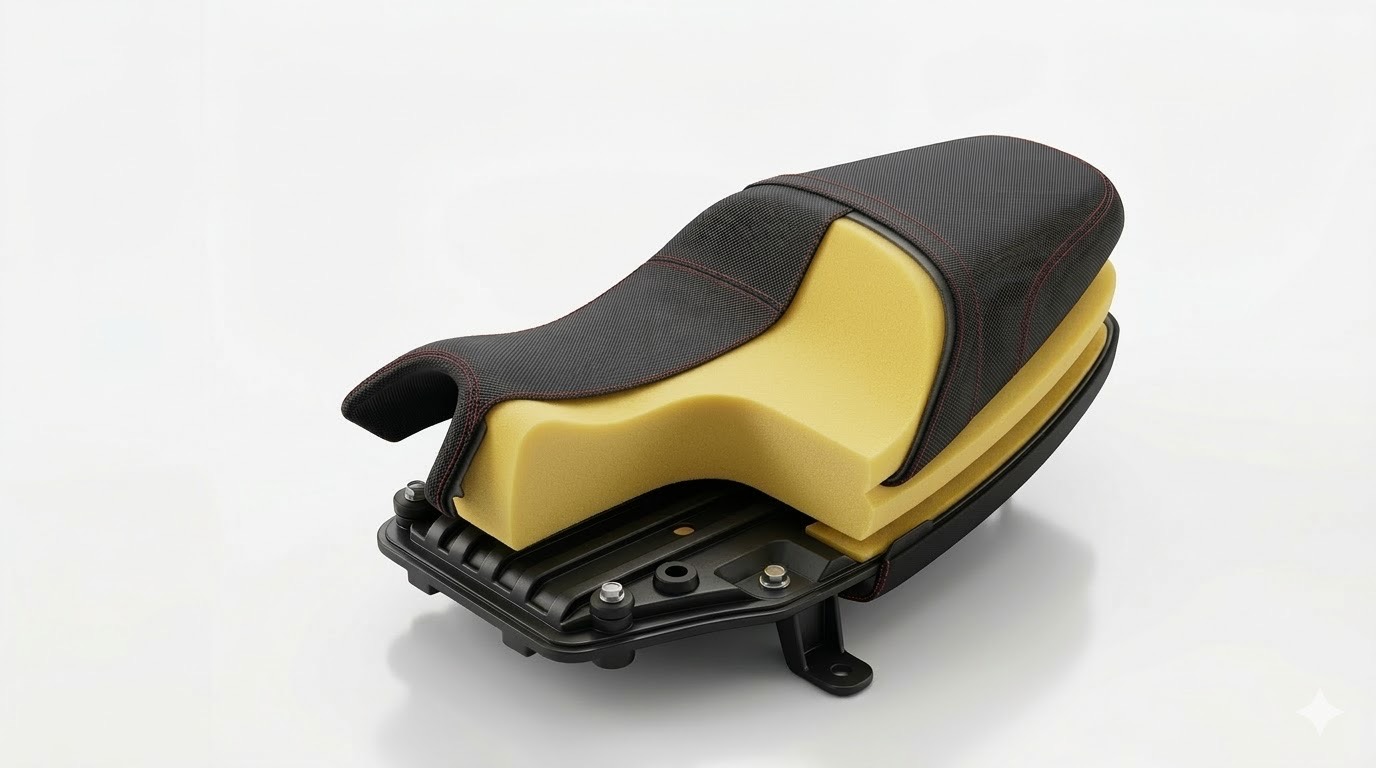
Material Topic
When integral-skin PU becomes the better route
Self-skin PU stands out when a part needs a finished outer surface, repeatable tactile feel and foamed internal support in one structure. It is often chosen when buyers want to simplify part construction and avoid secondary wrapping or surface covering steps.
Useful when touch feel, appearance and practical surface function must coexist
Helps reduce extra wrapping, covering or multi-part finishing steps
A practical choice for contact parts that need repeatable skin quality
Q&A Snapshot
Quick Answers
Short answers to the practical questions buyers usually ask first.
Why choose self-skin PU instead of adding a separate cover layer?
Self-skin PU can reduce structural complexity by forming the skin and foamed interior together, which is useful when touch, appearance and internal support all need to work in the same part.
Can a self-skin part still be soft underneath?
Yes. The skin layer and internal foam can be balanced around the intended use, which is why sampling is important before locking the route.
Can you review texture or surface expectations early?
Yes. Photos, reference samples and even a simple appearance brief are helpful for judging whether the expected skin effect is realistic for the part geometry.
Applications
Best-fit component types
These are the kinds of integral-skin parts buyers typically evaluate when surface quality and tactile behavior matter as much as internal foam performance.
Armrests, hand-contact pads and handle covers with a finished outer skin
Machine-contact covers, safety-touch parts and easy-clean outer interfaces
Functional wraps and protective covers where skin integrity affects use
Touch surfaces that need both visual consistency and softer interior behavior
Capabilities
What we help buyers validate on self-skin projects
Most self-skin issues appear at the boundary between surface expectation and part geometry. We focus on that interface early.
Route matching for skin feel, hardness level and interior foam balance
Review of edge transitions, visible surfaces and geometry that affects skin continuity
Sample validation around touch, appearance consistency and cleaning expectations
Production review for repeatable skin quality and molded-part stability
Buyer Brief
What to share before we review a self-skin route
If you want faster guidance on whether self-skin PU is appropriate, these are the inputs that help most.
Target surface feel, skin texture and any visual acceptability requirements
Part drawing, sample, or at least photos that show edge and interface conditions
Cleaning method, wear exposure, contact frequency and use environment
Whether the part sits on a substrate, insert, frame or other supporting structure
FAQ
Questions buyers ask about self-skin PU parts
Short answers to practical questions buyers often ask before starting a PU part project.
Why choose self-skin PU instead of adding a separate cover layer?
Self-skin PU can reduce structural complexity by forming the skin and foamed interior together, which is useful when touch, appearance and internal support all need to work in the same part.
Can a self-skin part still be soft underneath?
Yes. The skin layer and internal foam can be balanced around the intended use, which is why sampling is important before locking the route.
Can you review texture or surface expectations early?
Yes. Photos, reference samples and even a simple appearance brief are helpful for judging whether the expected skin effect is realistic for the part geometry.
Is self-skin only an appearance solution?
No. It is also valuable for protective covers, contact interfaces and wrapped functional parts where surface behavior affects real use.
Related Topics
Continue exploring our polyurethane focus areas
PU Molded Foaming
See when molded PU becomes the better route for shaped OEM parts that need geometry control, fit-up accuracy and stable performance.
View TopicSlow-Rebound PU
Review slow-rebound PU for comfort pads, pressure-distribution parts and body-contact components with softer recovery.
View TopicCustom PU Systems
Understand when a project needs custom PU development for special hardness, rebound, skin or tactile-performance targets.
View TopicFactory & Quality
Review real factory references, sample validation, inspection support and sample-to-production execution for PU projects.
View TopicPU Buffer Components
Explore shaped PU parts for impact control, anti-collision zones, protective contact and cushioning behavior.
View TopicPU Wrap Components
Dive into PU wrap parts for grip zones, outer-touch interfaces and soft-over-hard component structures.
View TopicPU Armrest Pads
Target sourcing searches for molded polyurethane armrest pads used in seating, equipment and shaped support interfaces.
View TopicPU Headrest & Support Pads
Cover headrest pads, support pads and body-contact parts where comfort, support and geometry all matter together.
View TopicSelf-Skin Armrest & Grip Parts
Capture buyers looking for durable touch surfaces, grip parts and self-skin PU outer-contact components.
View TopicMolded PU Protective Pads
Answer sourcing searches for anti-collision pads, protective inserts and shaped polyurethane protection parts.
View TopicPolyurethane Grip Wraps
Focus on grip wraps, touch covers and soft-over-hard polyurethane outer-contact components.
View TopicCustom PU Covers for Robots & Devices
Target robotics, smart-device and safe-contact cover programs that need differentiated polyurethane development.
View TopicPolyurethane Support Pads
Cover sourcing intent for support pads, positioning pads and shaped polyurethane parts that prioritize support over softness alone.
View TopicMolded PU Foam Inserts
Target equipment, case and product-protection insert searches where geometry and fit matter more than flat foam conversion.
View TopicPU Vibration Damping Parts
Focus on damping, noise-control and equipment-contact parts for structural interfaces and dynamic-use programs.
View TopicCustom PU Sampling Process
Answer process-led searches about how OEM buyers start polyurethane sampling, validation and production review.
View TopicNext Step
Need a supplier who can review the part route, not only quote a foam grade?
Whether you already have drawings or are still comparing options, we can review the use case, geometry and target performance together and help determine a practical polyurethane path for sampling and production.