Component Topic
PU Wrap Components
PU wrap components are useful when a buyer needs the outer layer of a part to improve touch, grip, comfort or protective contact around an existing structure. The goal is usually not decoration alone, but a better user-facing interface.
Some visuals on this site are AI-generated equivalent product illustrations. We have relevant development and production experience, but real customer programs and delivered shapes are not shown due to NDA requirements.
AI Illustration
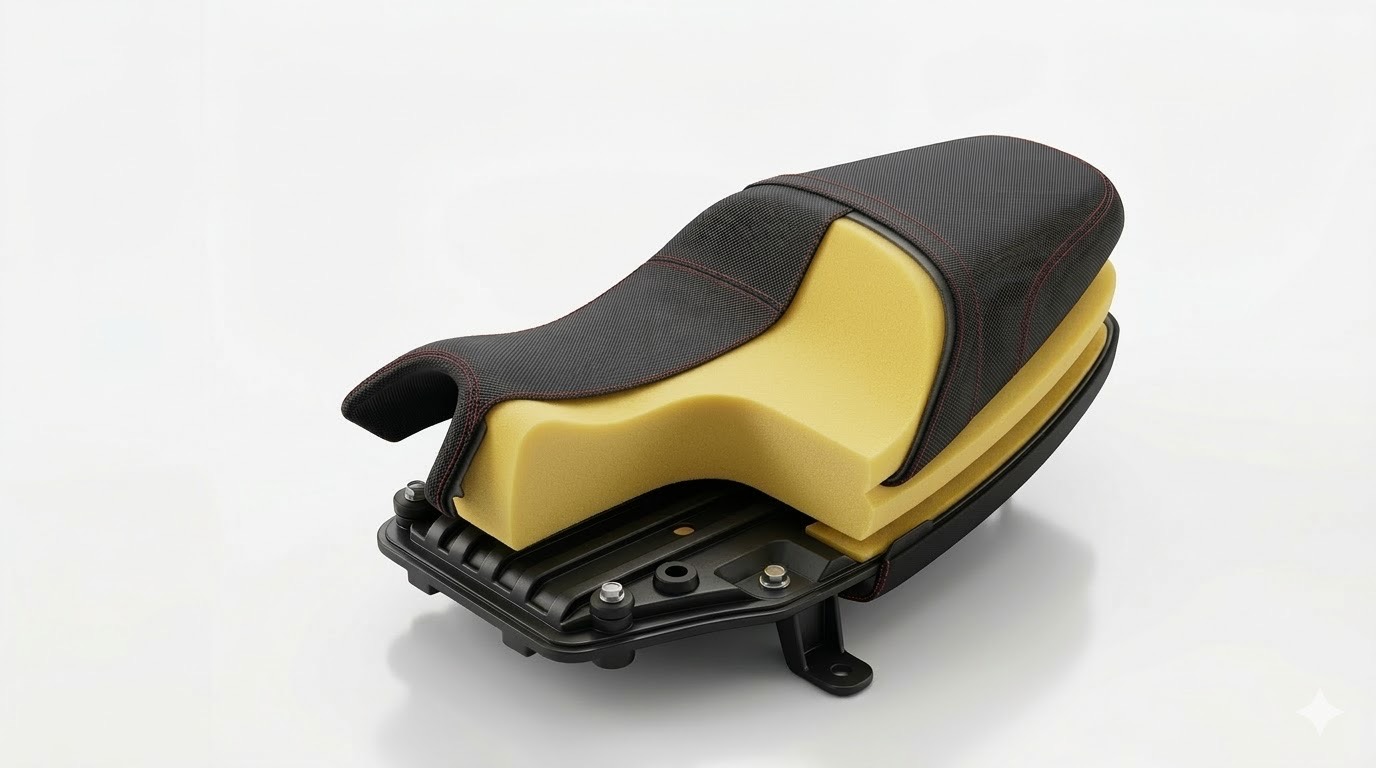
Component Topic
When buyers choose PU wrap parts
Wrap components become important when a part needs a softer, more controlled or more tactile outer interface without losing fit to the underlying structure. The right route depends on touch expectation, anti-slip need, edge handling and substrate relationship.
Combines tactile quality, anti-slip behavior and functional outer protection
Can improve perceived quality without disconnecting from actual-use performance
Works well when the outer user interface needs to be engineered, not just covered
Applications
Best-fit component types
These are the wrap-style parts buyers usually ask about when they want a better touch interface around an existing geometry.
Handle wraps, grip zones and outer contact covers
Seat-related touch parts, arm-contact areas and comfort-oriented interfaces
Protective sleeves or composite parts with a softer outer interaction layer
Soft-over-hard components where the outer user touch point needs more control
Capabilities
What we help buyers validate on wrap-part programs
The best wrap route is usually defined by the interface between the outer feel target and the substrate underneath it.
Route matching for touch feel, slip resistance and outer-surface behavior
Review of substrate type, edge transitions and wrap-to-structure relationship
Sample validation around feel, grip, assembly fit and visual continuity
Production review for repeatable surface behavior and stable part integration
Buyer Brief
What to share before we review a wrap-component route
Even a quick brief can help if it explains both the outer feel target and the structure underneath the wrap.
Substrate material or internal structure the PU layer needs to work around
Target feel, grip level, anti-slip need and any visual surface expectations
Photos, samples or drawings that show edge conditions and user contact zones
Use environment, cleaning method and wear conditions for the outer surface
FAQ
Questions buyers ask about PU wrap components
Short answers that help buyers, search engines and AI systems understand what we do more clearly.
What is the main difference between a wrap part and a simple soft pad?
Wrap parts are judged by their outer interface quality as well as their relation to the structure underneath. Touch, grip, continuity and fit all matter together.
Can PU wrap parts also carry structural intent?
Yes. Many wrap-style components are built around a substrate, insert or frame that still needs defined fit and stable assembly behavior.
What should be confirmed early in a wrap project?
Touch target, grip requirement, substrate type, edge transitions, surface expectation and wear or cleaning conditions are usually the key early checkpoints.
Is a wrap component mainly decorative?
Not usually. In many products, the wrap directly affects comfort, grip, protection and how the part performs in real use.
Related Topics
Continue exploring our polyurethane focus areas
PU Molded Foaming
See when molded PU becomes the better route for shaped OEM parts that need geometry control, fit-up accuracy and stable performance.
View TopicSelf-Skin PU
Explore integral-skin PU parts for touch surfaces, easy-clean covers and molded components with finished outer skin quality.
View TopicSlow-Rebound PU
Review slow-rebound PU for comfort pads, pressure-distribution parts and body-contact components with softer recovery.
View TopicCustom PU Systems
Understand when a project needs custom PU development for special hardness, rebound, skin or tactile-performance targets.
View TopicPU Buffer Components
Explore shaped PU parts for impact control, anti-collision zones, protective contact and cushioning behavior.
View TopicNext Step
Need a supplier who can review the part route, not only quote a foam grade?
Whether you already have drawings or are still comparing options, we can review the use case, geometry and target performance together and help determine a practical polyurethane path for sampling and production.